What Does Selah Mean? Selah in the Psalms and How to Practice It
Studying the Bible's original languages has deepened my faith more than almost anything else. When we understand the words the writers actually used, we get a richer picture of what the Bible meant to its first readers, and a deeper sense of what it can mean to us today. Selah is a small word that has changed how I pray.
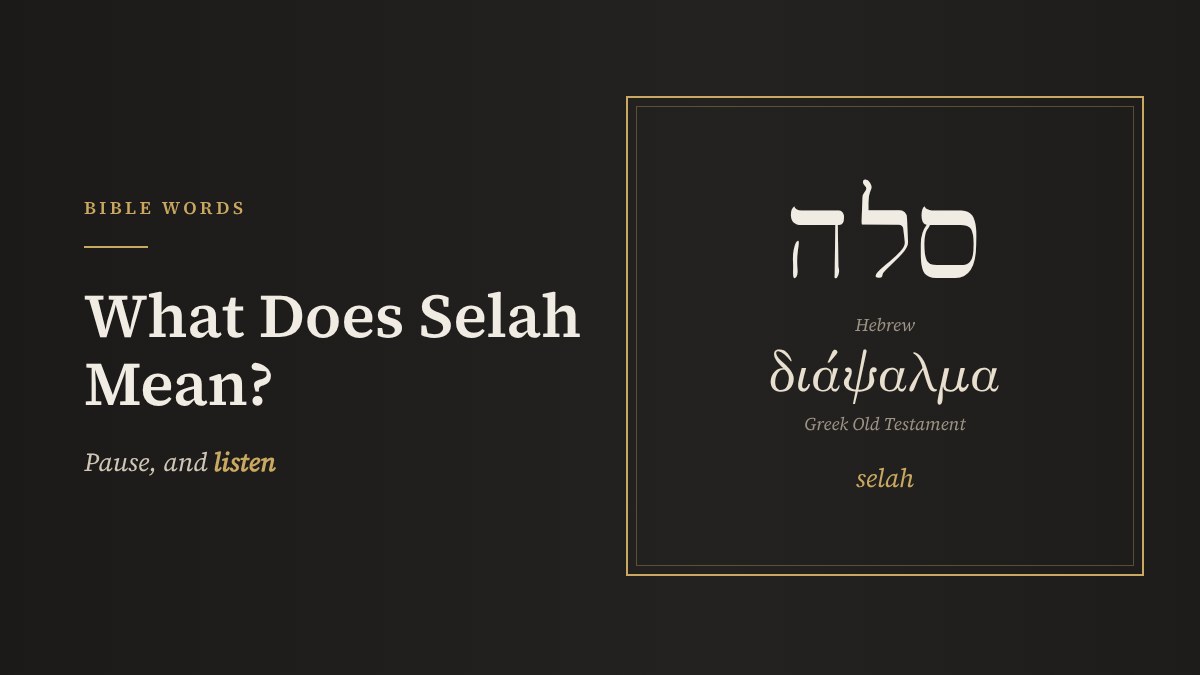
Selah is a Hebrew word that appears about seventy times in the Psalms and three times in Habakkuk. No one knows its exact meaning for certain. Most scholars think it was a musical or liturgical marker, probably a pause, a lifting of the voice or instruments, or a moment to reflect before the song went on.
But I don't think selah is just a pause. I think of it as a deeper pause for reflection: turning inward, getting quiet before God and entering His peace. It is the pause between moments, where we really get in touch with the presence of the living God.
Selah in the Hebrew Bible
Selah usually shows up right after something big has been said, as if the song wants you to stop and let it land.
“Be still, and know that I am God. I will be exalted among the nations. I will be exalted in the earth.” Yahweh of Armies is with us. The God of Jacob is our refuge. Selah.
Psalm 46:10-11, World English Bible
Sometimes it follows a confession of sin and the relief of being forgiven:
I acknowledged my sin to you. I didn’t hide my iniquity. I said, I will confess my transgressions to Yahweh, and you forgave the iniquity of my sin. Selah.
Psalm 32:5, World English Bible
Sometimes it follows an invitation to trust:
Trust in him at all times, you people. Pour out your heart before him. God is a refuge for us. Selah.
Psalm 62:8, World English Bible
Outside the Psalms, the prophet Habakkuk uses it three times in his closing prayer, the only other place it appears.
Is Selah in the New Testament?
No. Selah never appears in the Greek New Testament. When the Psalms were translated into Greek a few centuries before Jesus, in the version known as the Septuagint, the translators rendered selah as diapsalma, which suggests a musical interlude or a break in the song. So even the earliest translators seem to have understood it as a pause.
The closest New Testament picture of selah may be in Revelation. When the Lamb opens the seventh seal, all of heaven, which has been full of loud worship, goes quiet:
When he opened the seventh seal, there was silence in heaven for about half an hour.
Revelation 8:1, World English Bible
The word selah isn't there, but commentators have long read this as a holy pause. Some see it as a breathing space to take in what has been revealed before the next vision begins. Others connect it to the temple, where the people waited in silence while the priest offered incense. That fits what happens next: an angel offers incense "with the prayers of all the saints," and the smoke rises before God (Revelation 8:3-4). Heaven stops singing so the prayers of God's people can be heard. Habakkuk, the only book outside the Psalms that uses selah, says the same thing: "Yahweh is in his holy temple. Let all the earth be silent before him!" (Habakkuk 2:20).
The practice of selah also runs all through the Gospels. Jesus regularly withdrew to quiet places to pray. Mary sat at His feet and listened while Martha hurried (Luke 10:38-42). Before He chose His disciples, He spent the whole night in prayer (Luke 6:12). The word disappears, but the posture does not.
Learning Selah in the Silence
For a season I regularly went on quarterly retreats, and we would have times of "entering into the great silence": whole afternoons spent in silence and solitude. Nothing tested my life of prayer more than that uninterrupted time with God. I would pray every phrase, every thought, every request I had. I can be talkative, so I could go a long time. But eventually my words would run out. And there, in the silence, I would finally get to the bottom of the feelings, thoughts and desires I really longed to pray.
That is selah. Not empty quiet, but making room for God.
How to Practice Selah Today
You don't need a whole afternoon to start. Read a psalm slowly. Every time you see "Selah," stop. Put the Bible down, breathe, and ask, "God, what do You want me to notice here?" Wait a full minute before you go on. You may be surprised what rises to the surface when you finally stop talking.
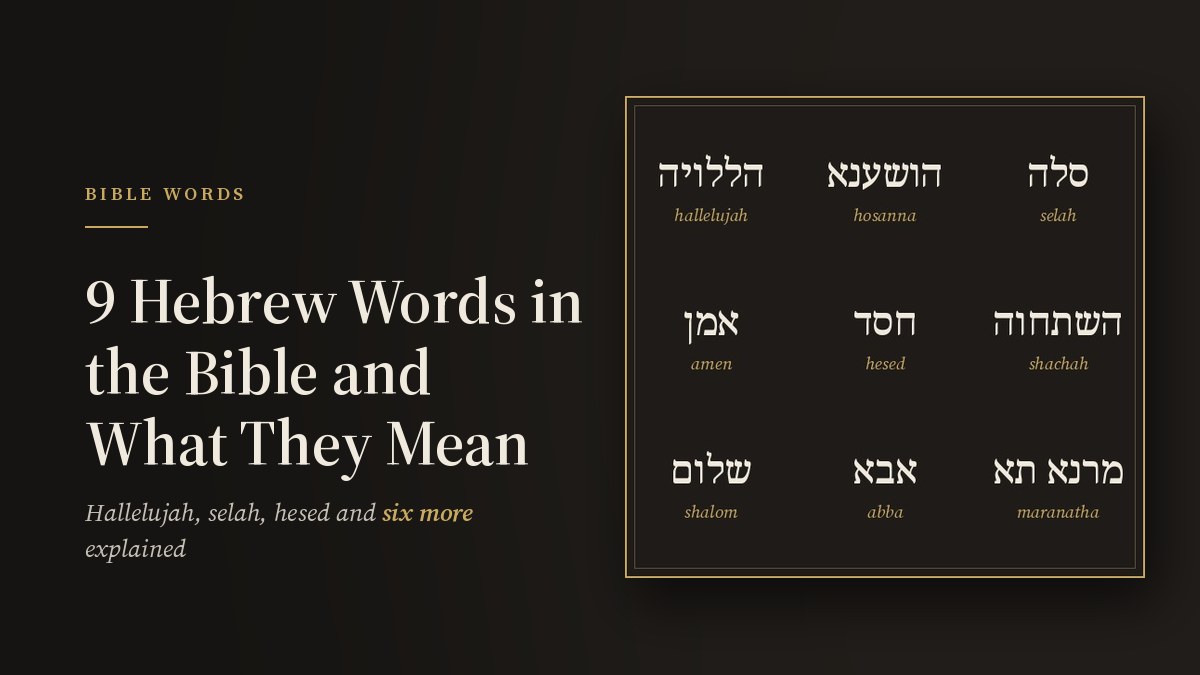
Go deeper. See how selah, shalom and Shabbat tell one story of rest in Selah, Shalom and Shabbat. Selah is one of 9 Hebrew Words in the Bible and What They Mean. Read the companion posts on amen, hallelujah and hosanna. Learn to make room for God in silence with the chapter "Silence: When Prayer Has No Words" in Conversations by Hazen and Hannah Stevens, and walk through the Songs of Ascent.
Scripture quotations are from the World English Bible (public domain).