Selah, Shalom and Shabbat: 3 Hebrew Words for Rest and Peace in the Bible
I love studying the Bible in its original languages, because so much can be lost in translation. When we understand the original words and what they meant, we get a richer sense of what the Bible meant to the people it was first written to, and a deeper sense of what it can mean to us. These three words have shaped how I think about rest more than any others.
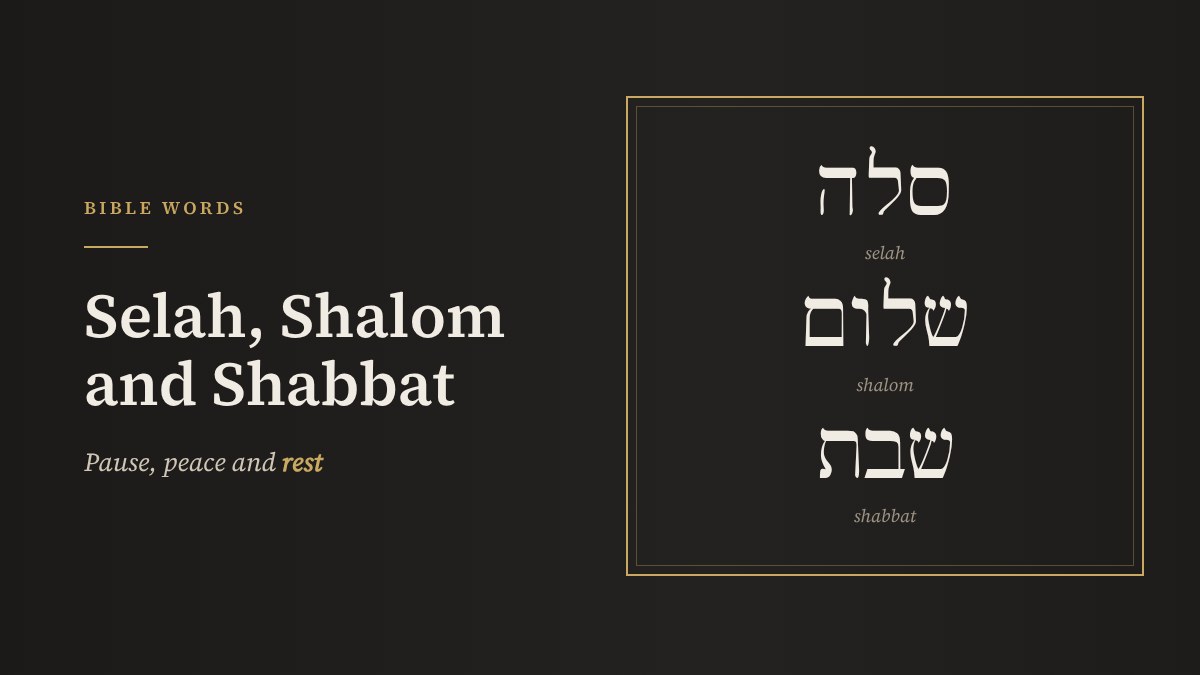
Selah, shalom and Shabbat are three Hebrew words that tell one story. Selah is the pause. Shalom is the peace and wholeness God gives. Shabbat is the rest God entered on the seventh day, and the rest He is bringing the whole earth into. They are not from the same root, but they belong together, because they describe the same God: a God who rests, who makes whole, and who invites us to stop and enter His peace.
Selah: The Pause
Selah appears about seventy times in the Psalms and three times in Habakkuk. No one knows its exact meaning for certain. Most scholars think it marked a pause in the song, a lifting of the voice or instruments, a moment to stop and let what was just sung land.
But I don't think selah is just a pause. I think of it as a deeper pause for reflection: turning inward, getting quiet before God and entering His peace.
“Be still, and know that I am God. I will be exalted among the nations. I will be exalted in the earth.”
Psalm 46:10, World English Bible
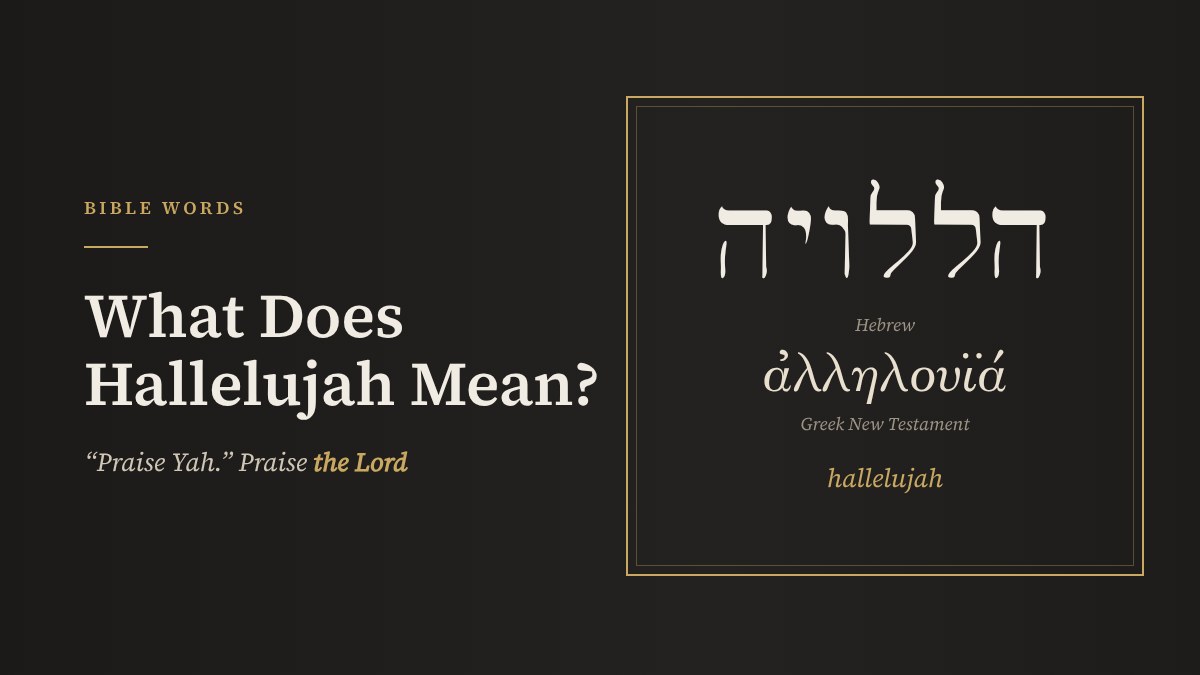
Selah is where rest begins. You cannot enter God's peace while you are still running. Read more in What Does Selah Mean?
Shalom: The Peace
Shalom means peace, but much more than the absence of conflict. It comes from a Hebrew root that means to be whole, complete, sound. Shalom is everything as it should be: right with God, right with others, right within yourself.
Isaiah says God keeps the one who trusts Him "in perfect peace" (Isaiah 26:3). In Hebrew, "perfect peace" is simply shalom shalom, peace doubled. It is peace all the way through.
Shalom is also tied to a city. The first time we meet Jerusalem in the Bible, it is called Salem, the city of Melchizedek, king and priest (Genesis 14:18). The book of Hebrews explains the name:
For this Melchizedek, king of Salem, priest of God Most High, who met Abraham returning from the slaughter of the kings and blessed him, to whom also Abraham divided a tenth part of all (being first, by interpretation, “king of righteousness”, and then also “king of Salem”, which means “king of peace”;
Hebrews 7:1-2, World English Bible
Jerusalem has long been understood as the city of peace, and God's people are told to "pray for the peace of Jerusalem" (Psalm 122:6). Yet the city has rarely known it. Its name is a promise waiting to be fulfilled, and Isaiah tells us who will fulfill it: the child called "Prince of Peace," whose government and peace will have no end (Isaiah 9:6-7).
Jesus brings that shalom now, into anxious hearts: "Peace I leave with you. My peace I give to you" (John 14:27).
Shabbat: The Rest
Shabbat, or Sabbath, comes from the Hebrew verb shabat, to stop or cease. The first time the idea appears, it isn't a command to people. It is something God does.
On the seventh day God finished his work which he had done; and he rested on the seventh day from all his work which he had done. God blessed the seventh day, and made it holy, because he rested in it from all his work of creation which he had done.
Genesis 2:2-3, World English Bible
God was not tired. He rested because the work was complete and good. Shabbat is rest that comes from finished work, and that is what makes it a picture of the gospel. We rest because Jesus finished what we never could.
A fourth Hebrew word runs alongside Shabbat: menuchah, a word for rest, settledness and quiet. When the Ten Commandments explain the Sabbath, they say God "rested the seventh day" (Exodus 20:11), using the verb behind menuchah. It is the word behind the "still waters" of Psalm 23, literally "waters of rest." And it is the word God uses when He calls it "my rest" (Psalm 95:11). Shabbat is the stopping. Menuchah is the settled peace you find when you stop.
The Rest Still Ahead
The Bible does not end with the Sabbath as a weekly habit. It points to a rest still coming.
There remains therefore a Sabbath rest for the people of God. For he who has entered into his rest has himself also rested from his works, as God did from his.
Hebrews 4:9-10, World English Bible
Some of the earliest Christians saw the seven days of creation as a picture of history: six days of labor, then a seventh day of rest when Christ returns and reigns. I believe the Scriptures point to exactly that kind of future. When Jesus returns, He will reign on a restored earth for a thousand years (Revelation 20:6), with Jerusalem finally living up to its name. The prophets describe it as the world's great Sabbath:
They will beat their swords into plowshares, and their spears into pruning hooks. Nation will not lift up sword against nation, neither will they learn war any more. But they will sit every man under his vine and under his fig tree; and no one will make them afraid: For the mouth of Yahweh of Armies has spoken.
Micah 4:3-4, World English Bible
That is selah, shalom and Shabbat all at once: the whole earth pausing, made whole and at rest, "full of the knowledge of Yahweh, as the waters cover the sea" (Isaiah 11:9).
What These Words Mean for You
You don't have to wait for that day to taste it. Jesus' invitation is open now:
“Come to me, all you who labor and are heavily burdened, and I will give you rest. Take my yoke upon you, and learn from me, for I am gentle and humble in heart; and you will find rest for your souls.
Matthew 11:28-29, World English Bible
Start with selah: stop, even for a few minutes today, and get quiet before God. Ask Him for His shalom in the places that feel broken or unfinished. And keep a Sabbath rhythm, one day each week to stop, worship and trust that God is holding what you set down. Every small rest now is a foretaste of the great rest that is coming.
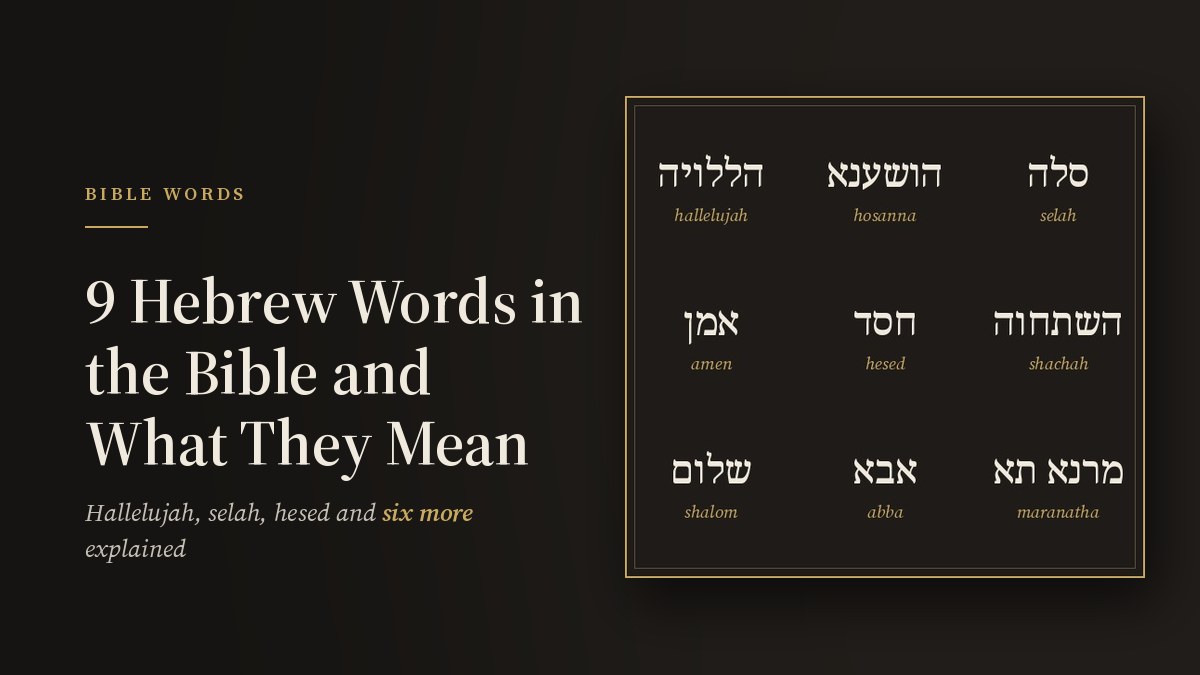
Go deeper. Read What Does Selah Mean?, 9 Hebrew Words in the Bible and What They Mean and 6 Greek Words in the Bible and What They Mean. For more on the return of Jesus, read Left Behind or Stepping Up?
Scripture quotations are from the World English Bible (public domain).