What Does Amen Mean? The Hebrew and Greek Meaning of Amen
I love studying the Bible in its original languages, because so much can be lost in translation. When we understand the original words and what they meant, we get a richer sense of what the Bible meant to the people it was first written to, and a deeper sense of what it can mean to us. Amen is a great place to start, because we say it every day.
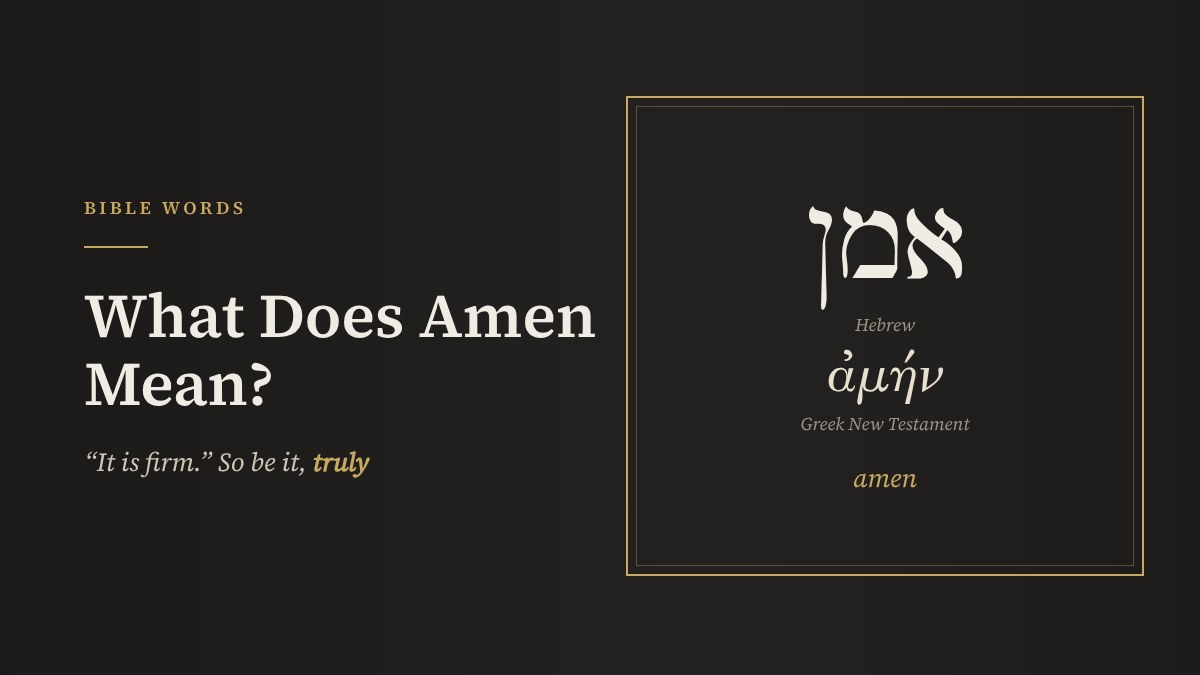
Amen means "so be it," "truly," or "it is firm." It comes from the Hebrew root aman, which carries the idea of being solid, reliable and trustworthy. The same root gives us the Hebrew words for faith and faithfulness. When we say amen, we are agreeing with God and putting our weight on what He said.
Most of us say it at the end of every prayer without a second thought. But amen is one of the few words that passed almost unchanged from Hebrew into Greek, then into Latin, English and nearly every language Christians speak. It is a word worth knowing.
Amen in the Hebrew Bible
In the Old Testament, amen is the people's answer. Someone speaks a blessing, a promise or a solemn word from God, and the people respond: amen. It is their way of saying, "That is true, and we stand on it."
When Ezra opened the book of the Law and read it to the people who had come home from exile, they answered with their whole bodies:
Then Ezra blessed Yahweh, the great God. All the people answered, “Amen, Amen,” with the lifting up of their hands. They bowed their heads, and worshiped Yahweh with their faces to the ground.
Nehemiah 8:6, World English Bible
Amen was not only for happy words. In Deuteronomy 27, as Israel prepared to enter the land, the Levites read out the warnings of the covenant one by one, and after each one "all the people shall answer and say, 'Amen'" (Deuteronomy 27:15). Saying amen meant accepting God's word as true, even the hard parts.
The Psalms use it as a seal at the end of praise. Book Four of the Psalms closes this way:
Blessed be Yahweh, the God of Israel, from everlasting even to everlasting! Let all the people say, “Amen.” Praise Yah!
Psalm 106:48, World English Bible
Amen in the Greek New Testament
The New Testament writers did not translate amen. They wrote it in Greek letters, amēn, and kept using it the way Israel did, at the close of prayers and praise. Paul even assumes the whole church will say "the Amen" together when someone gives thanks (1 Corinthians 14:16).
But Jesus used the word in a way no one had before. Instead of saying amen at the end, He said it at the beginning. Dozens of times in the Gospels He opens a teaching with "Amen, I tell you," which our English Bibles translate "Truly I tell you" or "Most certainly I tell you." In John's Gospel He often doubles it: "Amen, amen."
Jesus answered him, “Most certainly, I tell you, unless one is born anew, he can’t see God’s Kingdom.”
John 3:3, World English Bible
Other teachers said amen to agree with God's word. Jesus said amen to introduce His own word, because what He was about to say was already firm. He did not need anyone else to confirm it.
Then the New Testament goes one step further. Paul says every promise of God finds its yes in Jesus:
For however many are the promises of God, in him is the “Yes.” Therefore also through him is the “Amen”, to the glory of God through us.
2 Corinthians 1:20, World English Bible
And in Revelation, Jesus calls Himself by the word: "The Amen, the Faithful and True Witness" (Revelation 3:14). He is not only the One who says amen. He is the Amen. He is the One we can stand on.
What Amen Means for You
Amen is a small word with a lot of faith in it. When you say it, you are not signing off. You are saying, "God, I believe You. I am putting my weight on this."
Try this the next time you pray. Before you say amen, pause and ask yourself: do I believe what I just prayed? Do I trust the One I prayed to? If the answer is yes, say it like Israel did, with your whole heart. If the answer is "I want to," say that too. God is faithful, and Jesus is the Amen to every promise He has made.
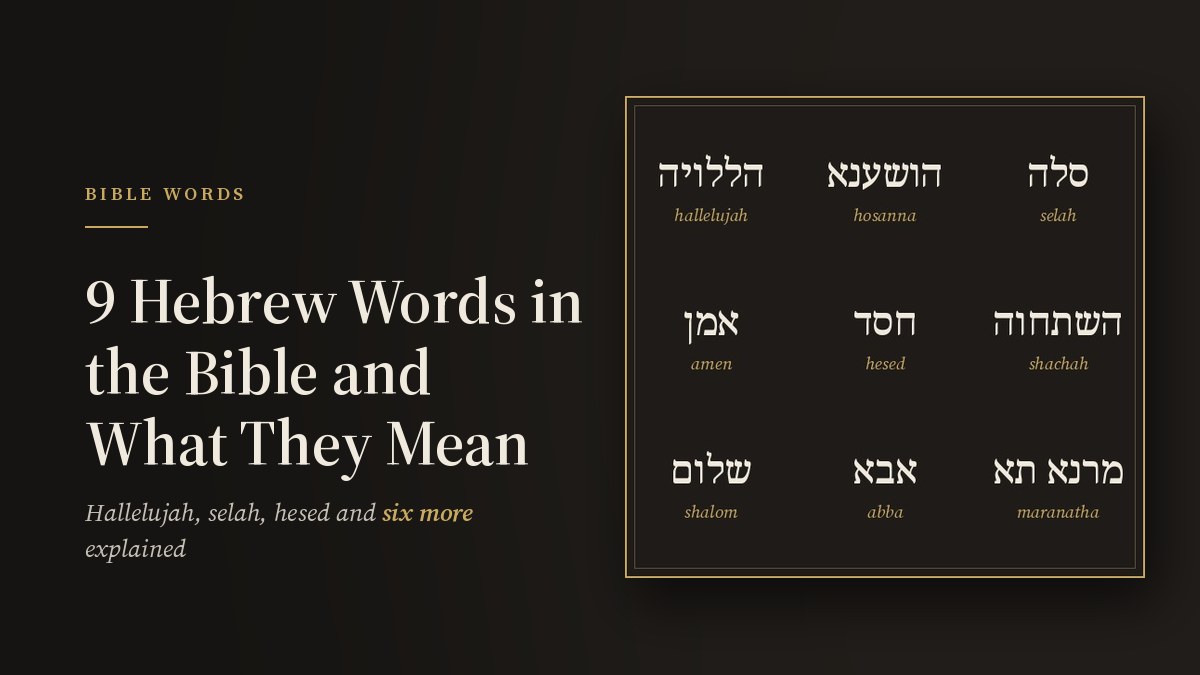
Go deeper. Amen is one of 9 Hebrew Words in the Bible and What They Mean. Read the companion posts on hallelujah, hosanna and selah, or 6 Greek Words in the Bible and What They Mean.
Scripture quotations are from the World English Bible (public domain).