
A Quieted Soul
Stillness is not the absence of prayer. It is the ground of it.
Incense & Oil · Part 3 · Psalm 131
I'll confess: as a kid, I would have come in last place in any quieted soul contest. I've never been the most patient person, and I like getting things done. In my family I was known as the one who never walked into a room. I ran. My parents joked that they always knew I was coming because they could hear me running.
But there is something on the other side of our efficiency, our busyness, and all our running to and fro. A quieted soul is where we experience God.
Prayer is not always about finding the right words. Sometimes it is simply quieting our souls and learning to be with God, without needing anything from Him or trying to make something happen. Psalm 131 is only three verses long, yet it gives us a picture of a soul at rest in God, moving from humility, to stillness, to hope.
My heart is not proud, LORD, my eyes are not haughty; I do not concern myself with great matters or things too wonderful for me. But I have calmed and quieted myself, I am like a weaned child with its mother; like a weaned child I am content. Israel, put your hope in the LORD both now and forevermore.
(Psalm 131:1–3, NIV)
Stillness is not the absence of prayer. It is the ground of it.
Clear all the way to the bottom
A few weeks ago we traveled to Montana and stood at the edge of Swan Lake, near Bigfork. The water was so clear you could see every stone on the bottom, purple, green, blue, gold, through ten or twenty feet of water.
I would love to say my soul usually looks like that. Honestly, it more often looks like a river after a storm, brown and cloudy, the soil all stirred up. By nine in the morning nothing terrible has happened, but the phone, the headlines, the lost shoe, and yesterday's conversation have stirred everything, and I can't see the bottom of my own heart. I can't see God there either.
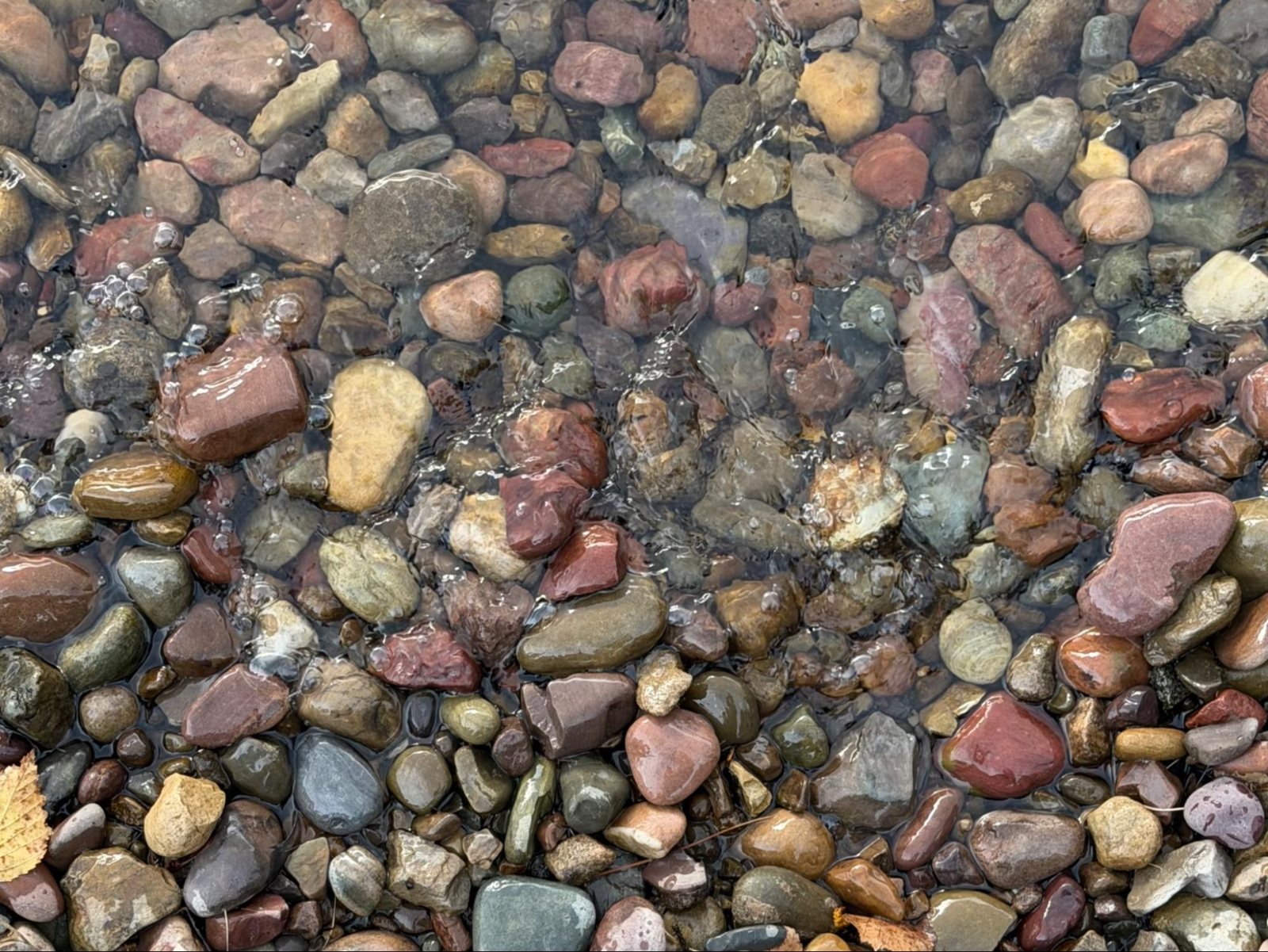
Here's what the water taught me. If you scoop muddy river water into a jar and shake it harder, it never clears. But set the jar down and leave it alone, and slowly the soil sinks. The water doesn't become clear by working harder. It becomes clear by being still.
1. A posture of humility: releasing what is too great for us
My heart is not proud, LORD, my eyes are not haughty; I do not concern myself with great matters or things too wonderful for me. (Psalm 131:1)
Humility is simply recognizing that we are not God. We don't have to understand everything, control everything, or carry everything. Striving is the shaking. Every time we grab for control or pick up what was never ours to carry, we stir the soil back up.
I learned this in a way I didn't expect. In 2017 I was part of a prayer movement for racial reconciliation across our city with OneRace. I played keys on the worship team, and we led worship at event after event, crying out for God to bring healing and unity to Atlanta. On September 12, 2017, in the middle of a worship set, I heard the Spirit of the Lord say to me: "Hannah, the biggest thing in the way of me doing what you are asking for is you. You are in pride."
I was asking God to move in our city, and He was pointing at my heart. I had been carrying the burden as if it depended on me, and even my praying had become a kind of striving. Those words were not condemnation. They were an invitation to set the jar down and let Him be God.
Maybe you're thinking, pride isn't really my struggle. I didn't think it was mine either. But most of the pride I've met in my own heart is quiet. It looks like strength and responsibility. It's the voice that says, I've got this. Independence feels like a virtue, but in the Kingdom it's often just pride with good manners.
So let me ask you, gently, the way the Lord asked me:
- When was the last time you asked someone for help, and meant it?
- Is it easier for you to give than to receive?
- When someone corrects you, do you get curious or defensive?
- Does your prayer life sound more like reporting to God than depending on Him?
- What are you carrying right now that you've never actually handed to Him?
If any of those landed, hear this: it's not condemnation. It's an invitation. "God opposes the proud but shows favor to the humble" (James 4:6). The moment we admit we can't do this alone, we stop shaking the jar, and grace has room to settle in.
2. A practice of stillness: learning to quiet our souls
But I have calmed and quieted myself, I am like a weaned child with its mother; like a weaned child I am content. (Psalm 131:2)
Notice the verbs: I have calmed and quieted myself. Stillness did not just happen to David. It is something we learn and practice.
A nursing baby comes to his mother hungry, fussing until he is fed. But a weaned child climbs into his mother's lap not for milk but simply to be near her. He is content because of who he is with. Much of our praying is nursing-baby prayer, and God welcomes it. But He also invites us into a deeper closeness, where we come not for what His hands can give but simply to be near His heart.
This is where the water settles. We stop shaking the jar, stop trying to fix it, and let God's presence do what only His presence can do. The soil sinks slowly, which is why stillness is a practice and not a one-time event.
Reflect: Can I be content simply to be with God, without asking or striving?
3. A promise of hope: resting in the faithfulness of God
Israel, put your hope in the LORD both now and forevermore. (Psalm 131:3)
David begins with humility, describes a soul that has learned to be still, and ends by pointing us to where our hope is found. The center of Christian stillness is not a technique. It is God Himself.
At Swan Lake, the stones on the bottom were solid and unmoved. In a churned-up river they would be just as real, only hidden. When life feels unsettled, it can be hard to see God's faithfulness, not because He has moved, but because so much is stirring within us. As our souls settle, we don't manufacture hope. We finally see what has been holding us all along.
Jesus says, "Come to me, all you who are weary and burdened, and I will give you rest... for I am gentle and humble in heart" (Matthew 11:28–29). Our rest is not found in the absence of difficulty. It is found in the presence of the One who loves us.
A practice for this week: release, rest, receive
Set aside five quiet minutes and put your phone in another room.
- Release. Name what you are carrying, and hand it to the Lord.
- Rest. Be still. You don't need to say or accomplish anything.
- Receive. Remember that you are loved, held, and welcome in His presence.
Then read Psalm 131:2–3 slowly, out loud if you can.
Join us this Sunday at 11am at Atlanta International School as we sit with Psalm 131 together and learn what it means to be held. Come climb with us. Plan your visit.